Industrial oven & drying chamber
Ovens handle drying, curing, ageing and preheating between 150 and 600 °C. The temperature band is not technically demanding; the difference lies in uniformity and energy use — a poorly uniform oven cures parts in the same batch to different degrees.
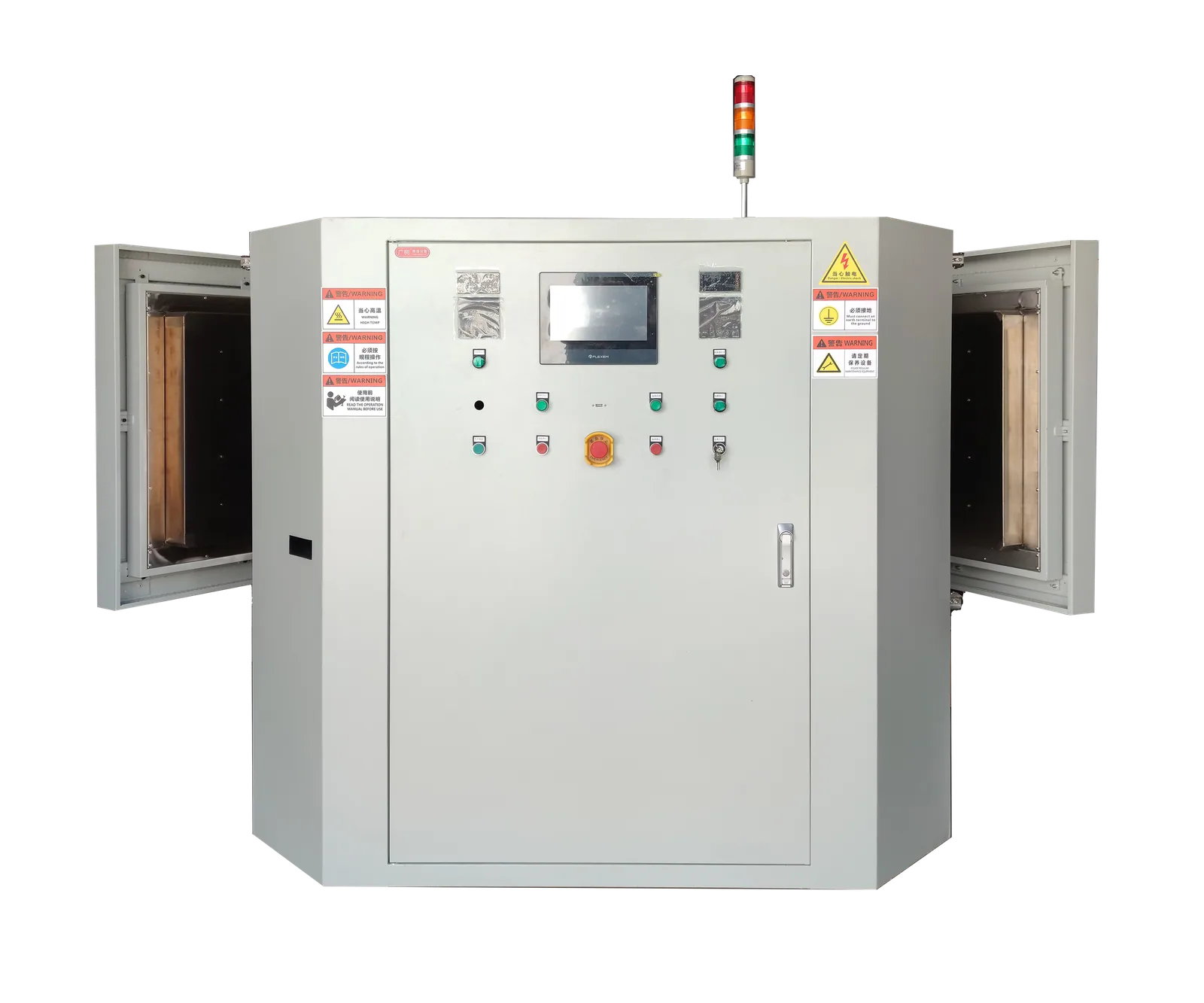
Also called forced-convection oven · drying oven · vacuum drying chamber
Other configurations of this type
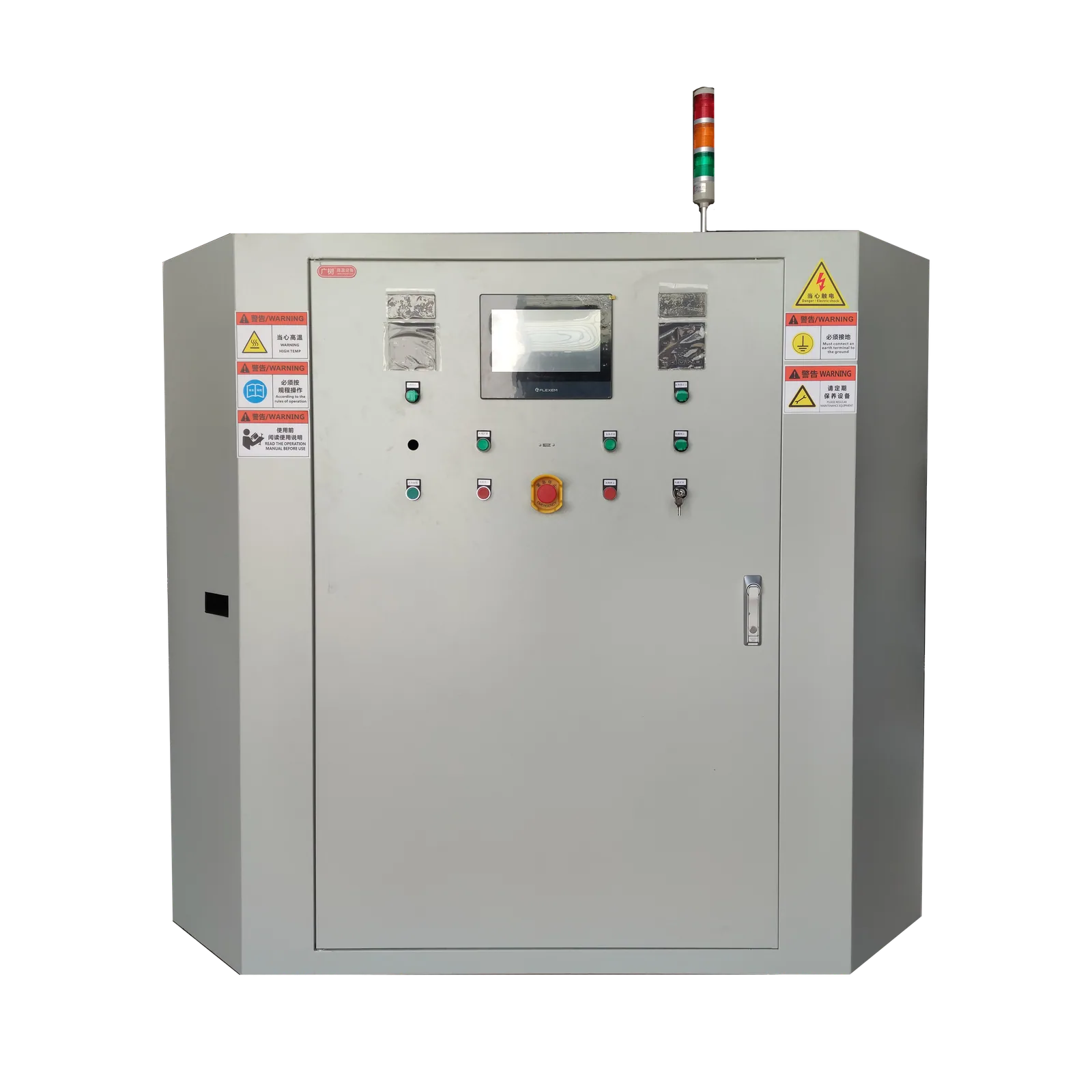
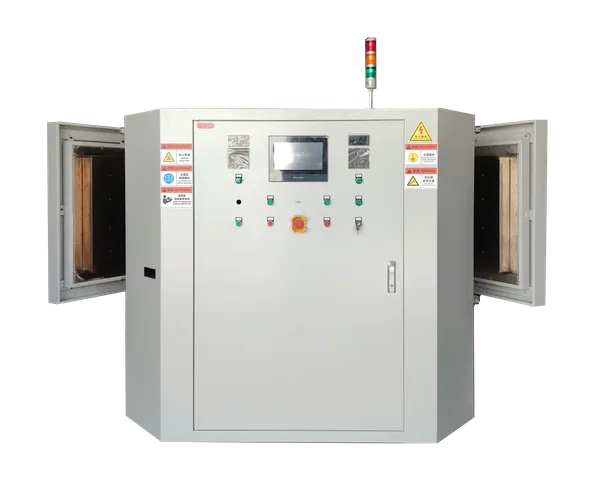
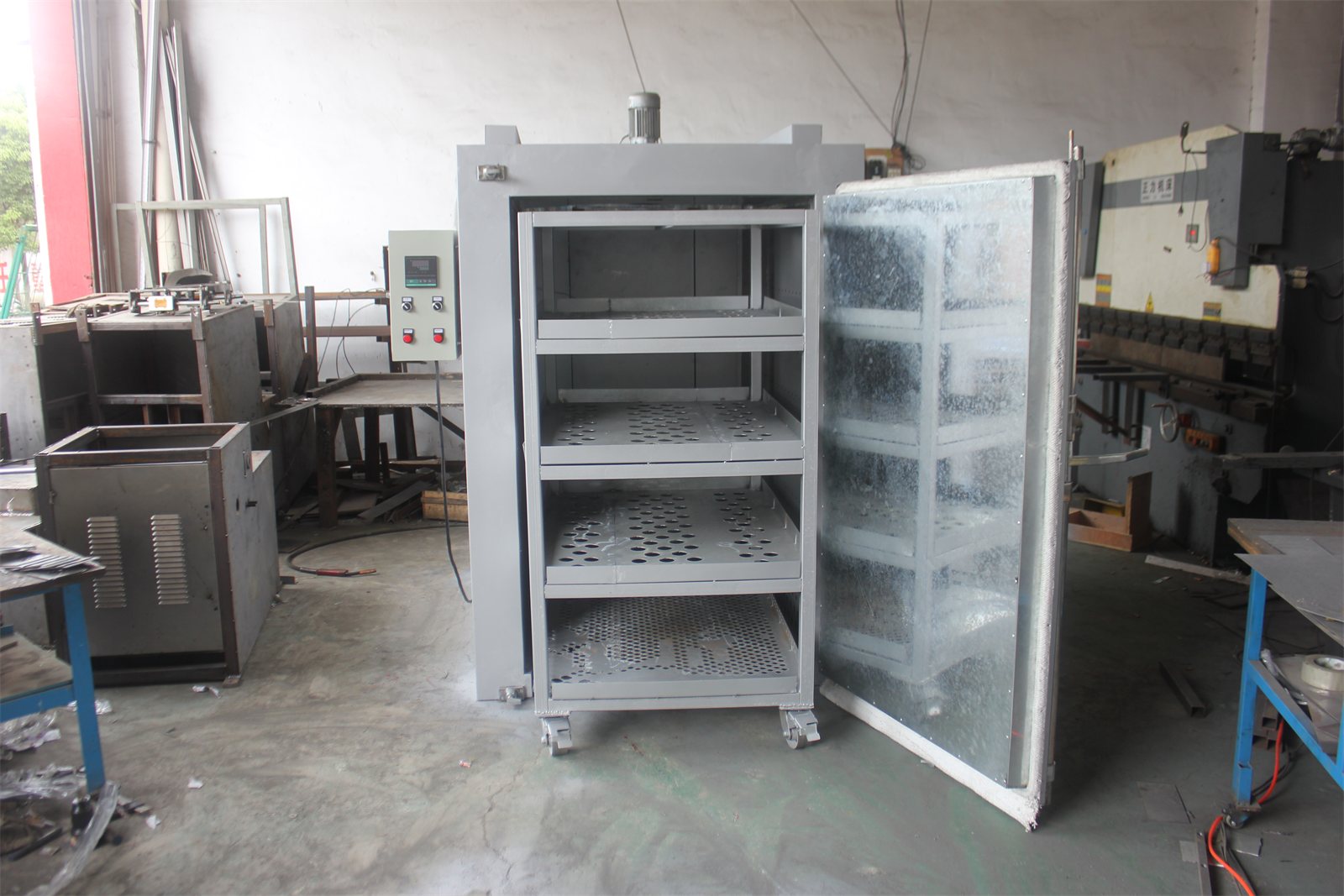
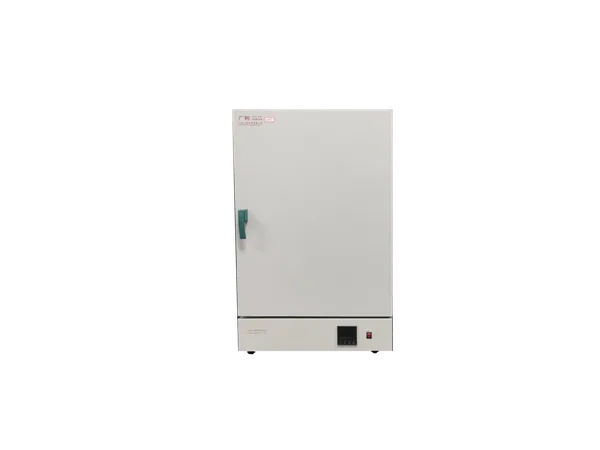
The same furnace type is built differently depending on loading and door arrangement. These are configurations we have delivered; captions describe what was verified in the photo, not what a filename suggests.
Three things that decide the specification
Each of these changes the final configuration — this is not general boilerplate.
Forced convection or static radiant — settle this first
Forced convection evens temperature and speeds the ramp but can move light parts; static radiant heating disturbs nothing but is slower and less uniform. Most drying and curing duties should use forced convection.
Vacuum drying is for material that cannot take high temperature
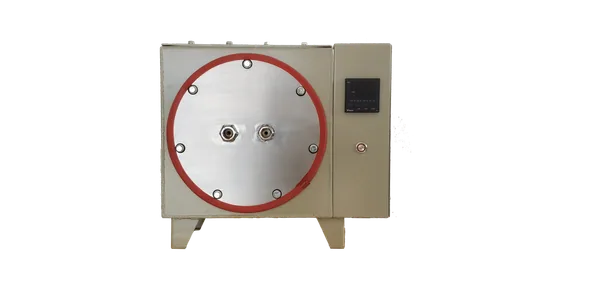
Lowering pressure drops the boiling point of water sharply, letting heat-sensitive material dry at 50–60 °C or below. The usual working temperature of a large GSH vacuum drying chamber is 50–60 °C with working vacuum adjustable between 2 and 5 kPa. Using a high-temperature oven for heat-sensitive material is a common mistake.
Surface moisture and bound moisture need different cycles
Surface moisture leaves with convection alone; bound moisture, as in ceramic bodies or powders, is diffusion-limited and needs a longer soak at higher temperature. Get the cycle estimate wrong and no equipment will hit the moisture target.
Delivered industrial oven & drying chamber systems
Open any system for its full specification and provenance.
Frequently asked
What uniformity is typical for an oven?
Forced-convection units typically achieve ±2 to ±3 °C empty and stabilised. Two cautions: uniformity degrades under load and depends heavily on how the load is arranged, and "stability" and "uniformity" are different figures — the first is variation over time at one point, the second is variation across points at one instant.
How large can a vacuum drying chamber be?
A GSH chamber runs to several metres (for example 3800 × 400 × 3150 mm). The difficulty in a large vacuum vessel is structural: under vacuum it sees external pressure, so it needs a reinforced frame and a calculated deflection rather than scaling up an atmospheric oven design.
Tell us your process conditions
Temperature, atmosphere, material and part size are enough for us to suggest a furnace type and draft a proposal.