Sintering furnace
Sintering turns a powder compact into a dense body, and temperature, time and atmosphere are all essential. Guangshu builds both bell-type and rotary sintering furnaces up to 1700 °C.
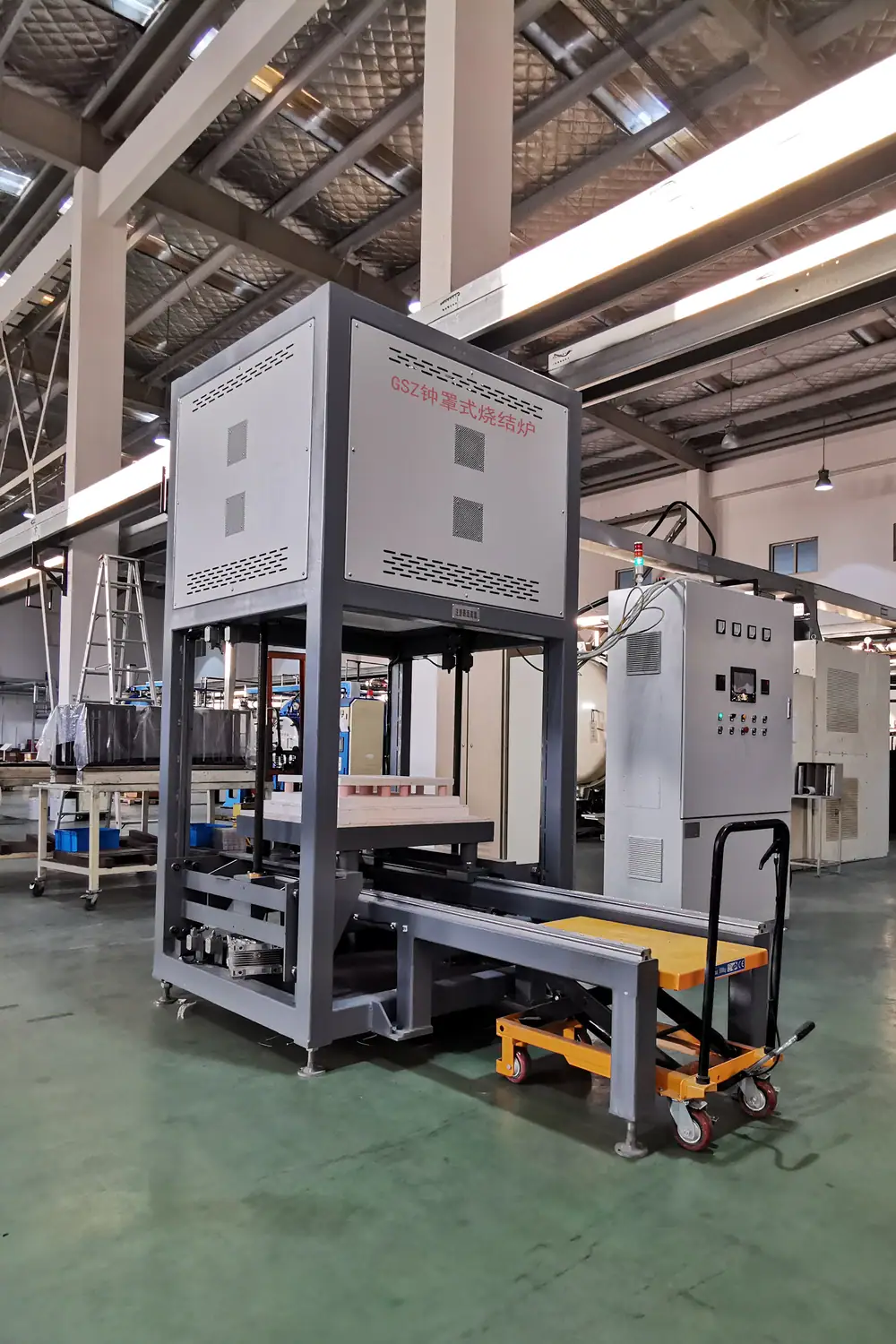
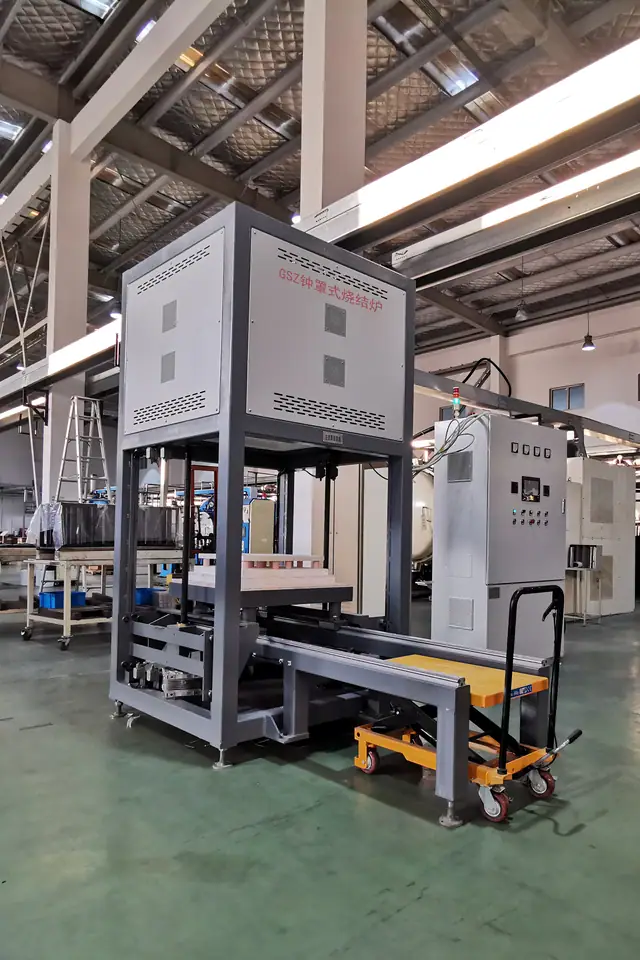
Also called bell-type sintering furnace · rotary furnace · ceramic sintering furnace
Three things that decide the specification
Each of these changes the final configuration — this is not general boilerplate.
Bell-type suits large loads that need even heat
A bell-type furnace heats from the sides and top at once and has no door acting as a heat leak, so the field is more even than a box furnace of the same volume. GSF-12-1700 uses 18 U-shaped MoSi₂ rods with single-point control and diagonal sensing, in a 1200 × 1000 × 1000 mm chamber.
Rotary design solves agglomeration, not temperature
In a static furnace, powder sinters into lumps that need crushing afterwards. A rotary furnace turns the tube slowly so the charge keeps tumbling, sintering evenly without agglomeration. GSZ-75-1000 is this type.
Atmosphere purity affects sintered density more than temperature
When sintering metal powders, residual oxygen forms oxides at grain boundaries and blocks densification. Vacuum or high-purity inert atmosphere is often more effective than another 50 °C. Weigh atmosphere retention and peak temperature equally when specifying.
Delivered sintering furnace systems
Open any system for its full specification and provenance.
Frequently asked
Can debinding and sintering be done in one furnace?
Yes, and doing both in one furnace avoids the oxidation and breakage of a second loading. But the debinding stage releases heavy volatiles, so exhaust and off-gas treatment are mandatory; otherwise they recondense inside, contaminating the chamber and elements and affecting later batches.
Bell-type versus pit furnace?
A bell-type furnace has the shell lowered over the load platform, so the bell lifts for loading — good for large, heavy work. A pit furnace lowers the load into the chamber from above, saving floor space but limiting load size to the opening. Both avoid the heat loss of a side door.
Other furnace types
Tell us your process conditions
Temperature, atmosphere, material and part size are enough for us to suggest a furnace type and draft a proposal.