Pit furnace
A pit furnace is a vertical chamber loaded from above: it takes little floor space, loses little heat when opened, and lets long shafts or heavy parts go in as one piece. The pit furnaces we have built fall into two families — carburizing pit furnaces and pit vacuum furnaces — whose lid sealing, inner-vessel material and pump set follow the process. They are not the same machine.
Also called pit-type heat treatment furnace · pit carburizing furnace · pit vacuum furnace · lift-type carburizing pit furnace
Three things that decide the specification
Each of these changes the final configuration — this is not general boilerplate.
Specify a pit furnace by its opening, not its volume
The workload goes in from above, so what fits is decided by three things together: the opening diameter, the chamber depth and the lifting clearance in your shop. The GS-140-1.1 pit vacuum furnace we delivered has an effective chamber of φ1.4 × 1.1 m — that is the figure to work from. Give the envelope diameter of your largest part plus the total height including lifting gear and size the chamber from that; a volume figure tells us much less.
In a deep chamber, zoning and circulation hold the top-to-bottom spread down
A pit furnace is tall, so the vertical spread is the main risk and single-zone heating rarely holds it. GS-140-1.1 uses two-zone control plus a water-cooled vacuum-tight circulation fan (3 kW, 1300 Pa) to reach ≤±10 °C uniformity in the working zone at ≤±1 °C control accuracy, heating empty from ambient to 920 °C in ≤1.5 h. The question to ask is not "what is the uniformity" but "how many control zones, and is there circulation".
Vacuum or carburizing comes down to lid sealing and the inner vessel
The same silhouette hides two different machines. The vacuum unit (GS-140-1.1) uses a 10 mm 321 cast-steel retort, ultimate pressure ≤6×10⁻² Pa with a 2X-8A pump (2.2 kW, 4 L/s), and a lid raised by a 0.75 kW motor with a skin temperature ≤65 °C. The carburizing unit (GSL-1000VCS) is rated 1000 °C design / ≤950 °C working with vacuum to ≤1×10⁻³ Pa, a 310S stainless inner vessel 10 mm thick, an alumina-ceramic and imported-fiber chamber, a Yudian 828 controller and an adjustable 1–10 °C/min ramp. State the process (carburizing, vacuum or tempering) and the atmosphere, and the lid sealing class and vessel material follow.
Delivered pit furnace systems
Open any system for its full specification and provenance.
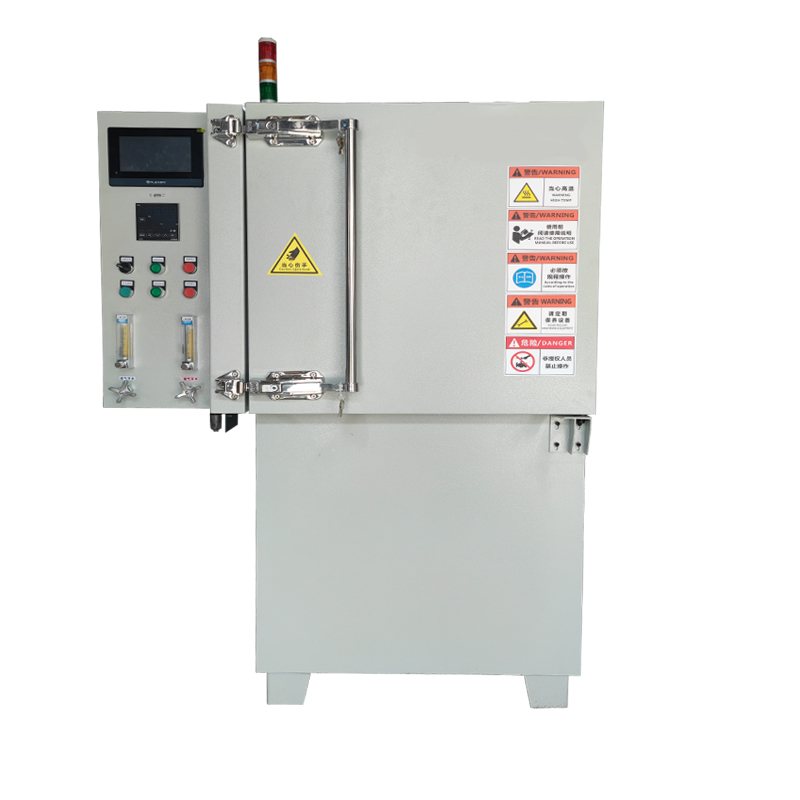
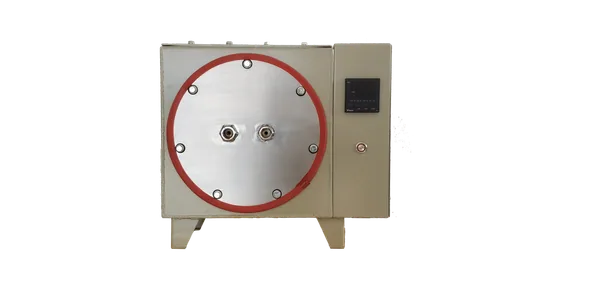
Frequently asked
Pit furnace or box furnace?
By part shape and how you load it. Long, slender or heavy parts that go in as one piece suit a pit furnace: lowering from above keeps the part supported, uses little floor space and loses little heat when opened. Plates, small batches and work handled often suit a box furnace, whose hearth is easier to load onto. The pit design pays for this with an opening-size limit, and a lifting arrangement is mandatory.
Can one pit furnace do both vacuum and carburizing?
Yes, but specify it to the most demanding duty: lid sealing, inner-vessel (or retort) material and pump set. Our two delivered units are exactly those two configurations — GS-140-1.1, a pit vacuum furnace with a retort and high vacuum (ultimate pressure ≤6×10⁻² Pa), and GSL-1000VCS, a lift-type carburizing pit furnace with a 310S vessel, vacuum to ≤1×10⁻³ Pa and ≤950 °C working temperature. If flammable gas is involved, dedicated purge and explosion-prevention procedures are required; the inert-gas routine does not carry over.
Other furnace types
Tell us your process conditions
Temperature, atmosphere, material and part size are enough for us to suggest a furnace type and draft a proposal.