Muffle furnace
The muffle furnace is the workhorse for laboratory and small-workpiece high-temperature processing. Guangshu muffle furnaces are banded by chamber material and heating element, up to 1800 °C, covering ashing, ignition, sintering, heat treatment and materials testing.
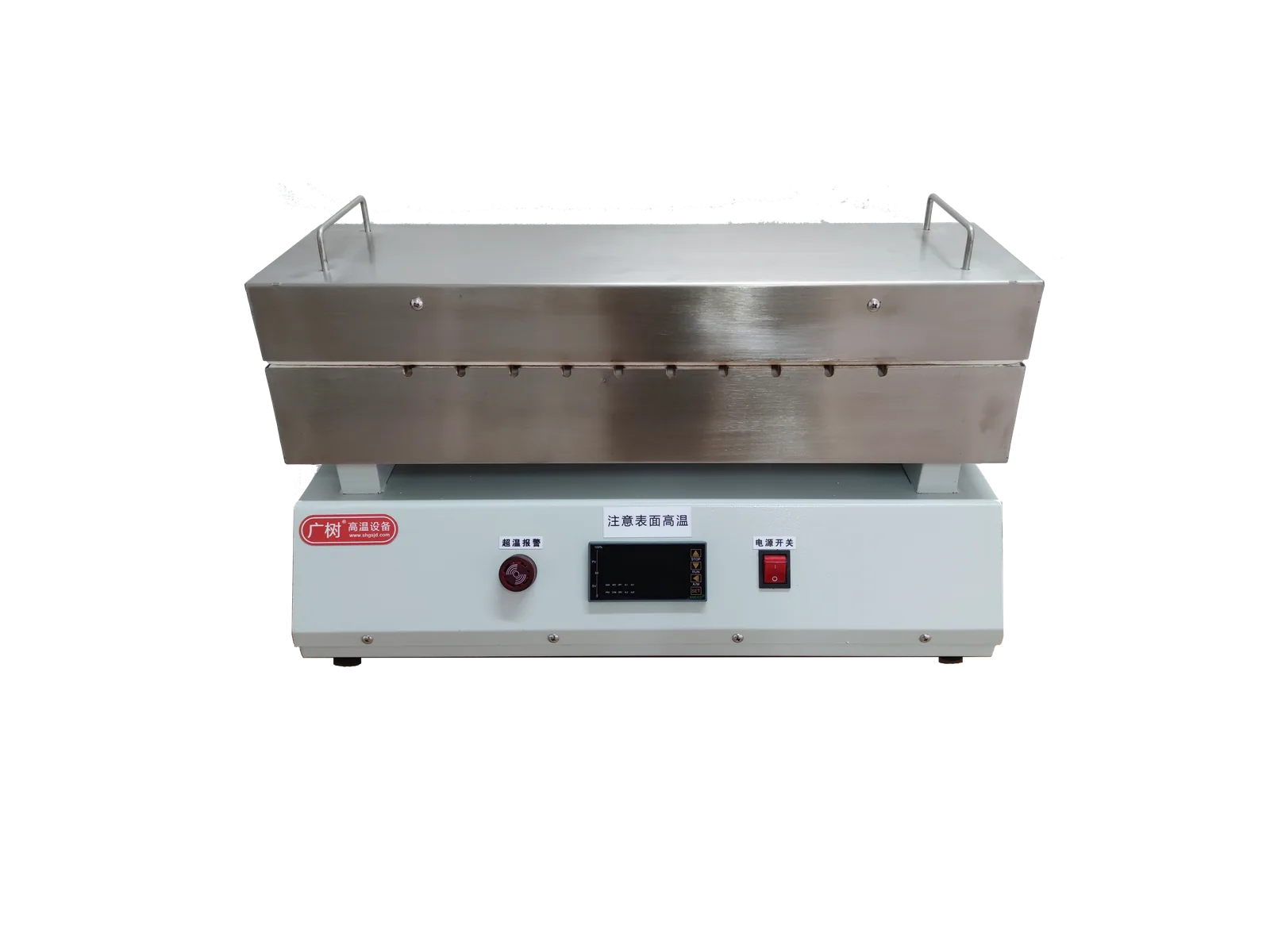
Also called box muffle furnace · high-temperature muffle furnace · laboratory muffle furnace
Three things that decide the specification
Each of these changes the final configuration — this is not general boilerplate.
Pick the element by temperature band — the wrong one collapses service life
Below 1200 °C: HRE alloy wire or SiC rods. At 1400 °C: SiC. Above 1600 °C: MoSi₂ is mandatory. MoSi₂ undergoes a brittle transition between 400 and 700 °C, so ramp rates must be reduced through that band or the elements crack.
One-piece or segmented chamber — this decides heat leakage
A one-piece polycrystalline alumina fiber chamber has no joints, so it will not leak heat along seams or crack under thermal shock. A segmented chamber is cheaper up front, but shell temperature climbs noticeably within two to three years.
Uniformity is a measured figure — ask for the conditions
Uniformity is only meaningful when measured empty, at a stated temperature, after a stated stabilization time. The same furnace can differ by a factor of two between 800 °C and 1200 °C. We ship the measured report with preconditions and controller parameters so it can be reproduced.
Delivered muffle furnace systems
Open any system for its full specification and provenance.
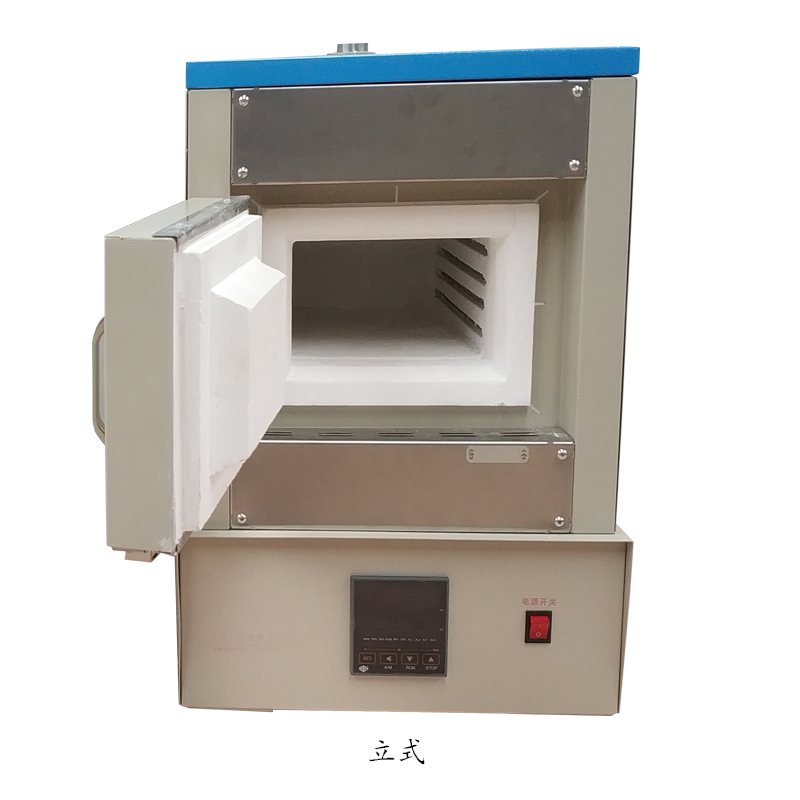
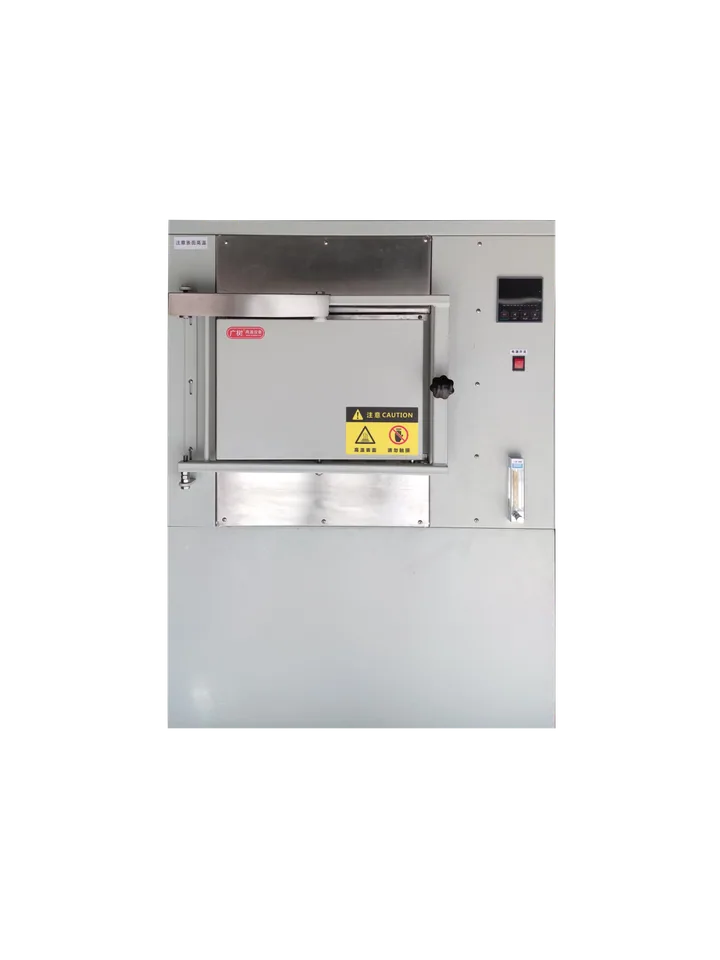
Frequently asked
What is the difference between a muffle furnace and a box furnace?
The terms are often used interchangeably. Strictly, "muffle" refers to a barrier between the workload and the heating elements so they do not radiate directly onto it; "box" describes the form factor. What actually matters when specifying is chamber material, element material, measured uniformity and the number of control segments.
Can an 1800 °C muffle furnace run at 1800 °C continuously?
Usually not. A nominal 1800 °C rating means short-term capability; continuous service is typically ≤1700 °C. We list maximum and continuous ratings separately because the gap is large, and sizing should follow the continuous figure.
Other furnace types
Tell us your process conditions
Temperature, atmosphere, material and part size are enough for us to suggest a furnace type and draft a proposal.